
 Ludwig Göransson
Mythic Music and Entropic Production
published in The Wire No.513, 2026, London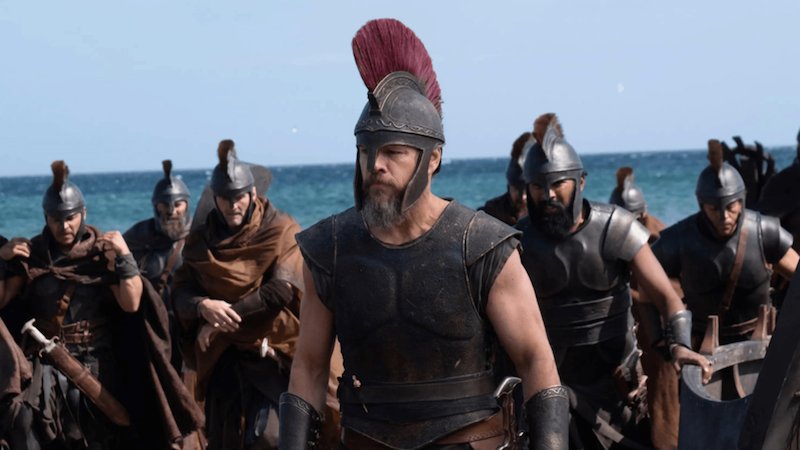
Excerpt
(...)
Musicologically, The Odyssey’s score is built from themes articulated by folk instrumentation: the Greek aulos, a double-pipe operated by a single performer, resulting in harmonised lines; and kithara lyres, with mellow string resonance accentuated by textural plectrum scrapes. Buffeting and buoying their tones are bronze gongs, metal bowls, steel covers, iron balustrades; all struck, hammered, raked and swiped. Research into the philological grammar of Greek melodies was undertaken for the film, but the aural world captured in the studio sessions mostly conveys The Odyssey’s musicality.
Worth noting here is the legacy of Italian movies which undertook bipartisan approaches to radical sonics and cultural traditions. Federico Fellini’s Satyricon (1969) is based on Petronius’ 1st Century AD satirical novel, but wildly mixes delicate themes by Nino Rota with sourced electro-acoustic pieces by Tod Dockstader, Andrew Rudin and Ilhan Mimaroglu — often layering multiple tracks together. Pier Paolo Pasolini’s Oedipus Rex (1967) is based on Sophocles’ Athenian tragedy from the 5th Century BC, and it similarly collages a wide array of Folkways LP tracks of indigenous music from around the globe. Both films steadfastly rejected the musical artifice and pretentions of peplum productions. Experienced today, these two films still excite with powerful audiovisual charge — something The Odyssey’s score inherits.
(...)
Text © Philip Brophy 2026. Image © Warner Bros.
hyper material for our very brain

All contents © Philip Brophy with great pain of taking.
Please accept offensive behaviour.
We have safety but for children.